
Discovery Research
Uncovering Opportunities to Improve the End-to-End User Journey
BOTTOM LINE UP-FRONT
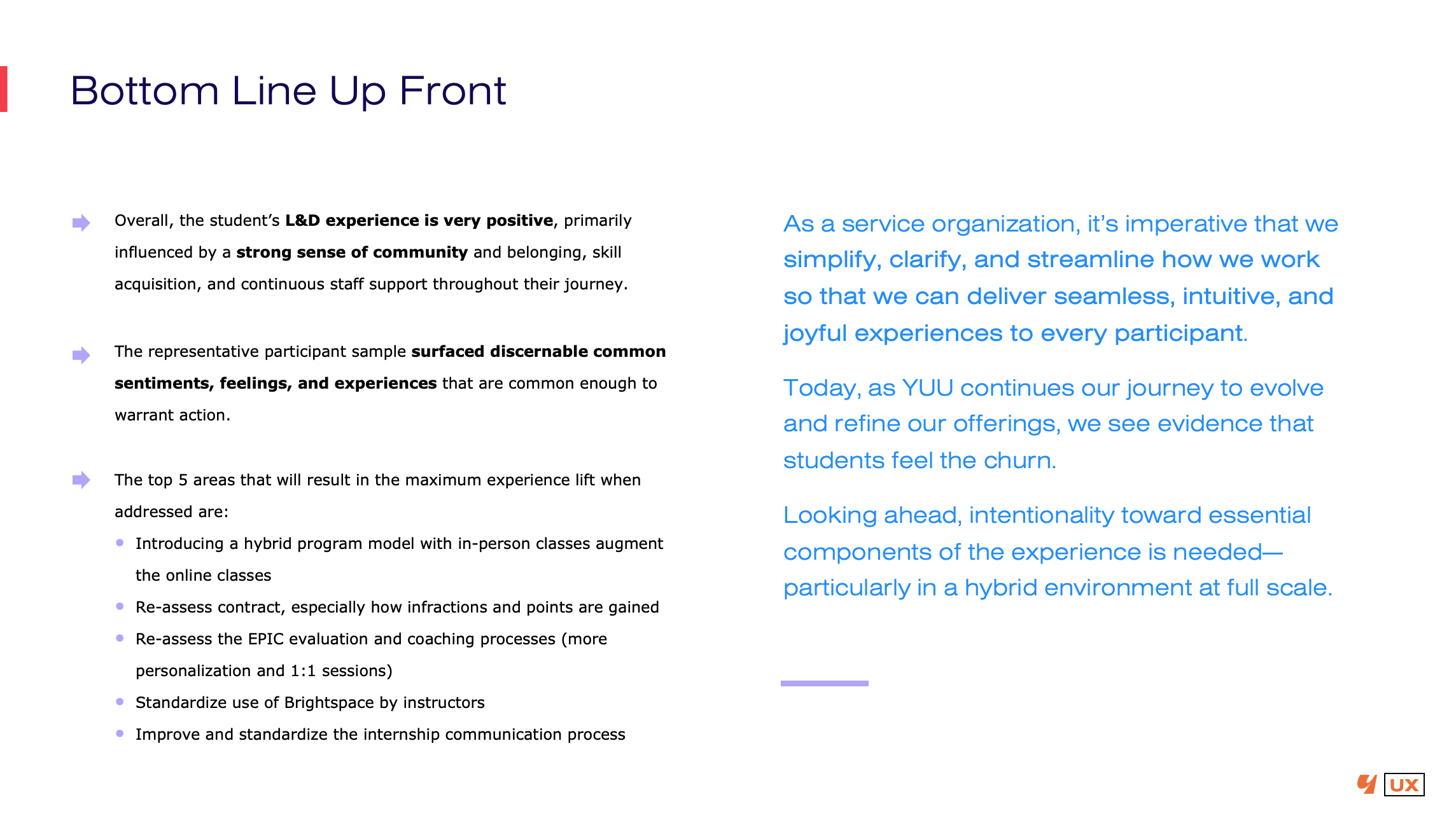
This case study documents a multi-phase, two-year longitudinal discovery research initiative spanning the full student lifecycle, from initial application through graduation. At the conclusion of the second of four planned phases, the study was paused in order to absorb and act upon a body of evidence rich enough to inform the product team’s backlog for the next 24 to 36 months, as well as heavily influence the Transformation & Technology organization’s broader three-year roadmap.
CONTEXT
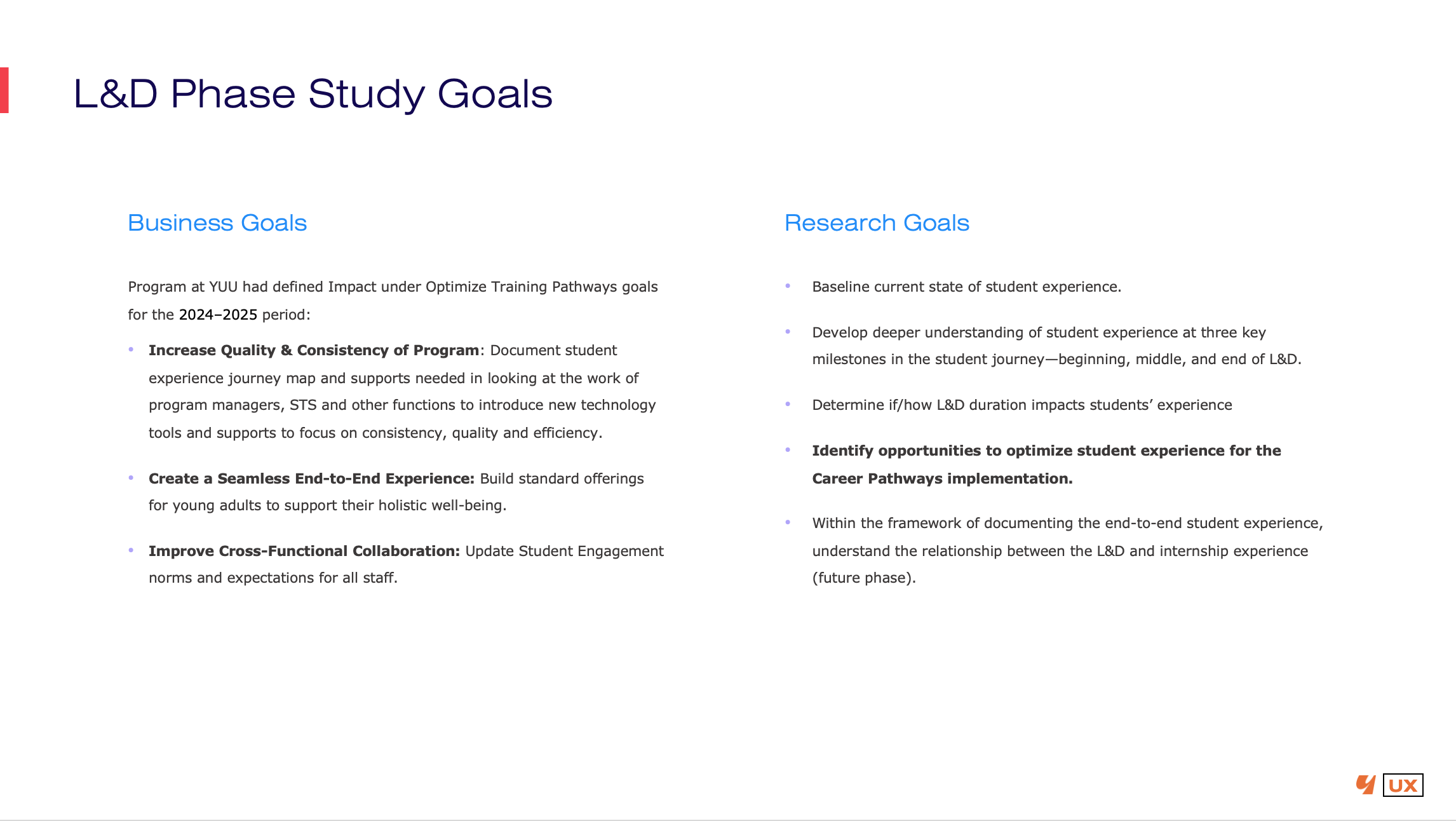
Year Up United is a skills-first nonprofit organization that prepares young adults for meaningful careers through tuition-free training and corporate internships. As the organization scaled toward its Career Pathways model and published its 24/25 Impact Goals—including a mandate to "create a seamless end-to-end experience for participants"—the need for a comprehensive, human-centered view of the student journey became urgent.
Understanding the Problem
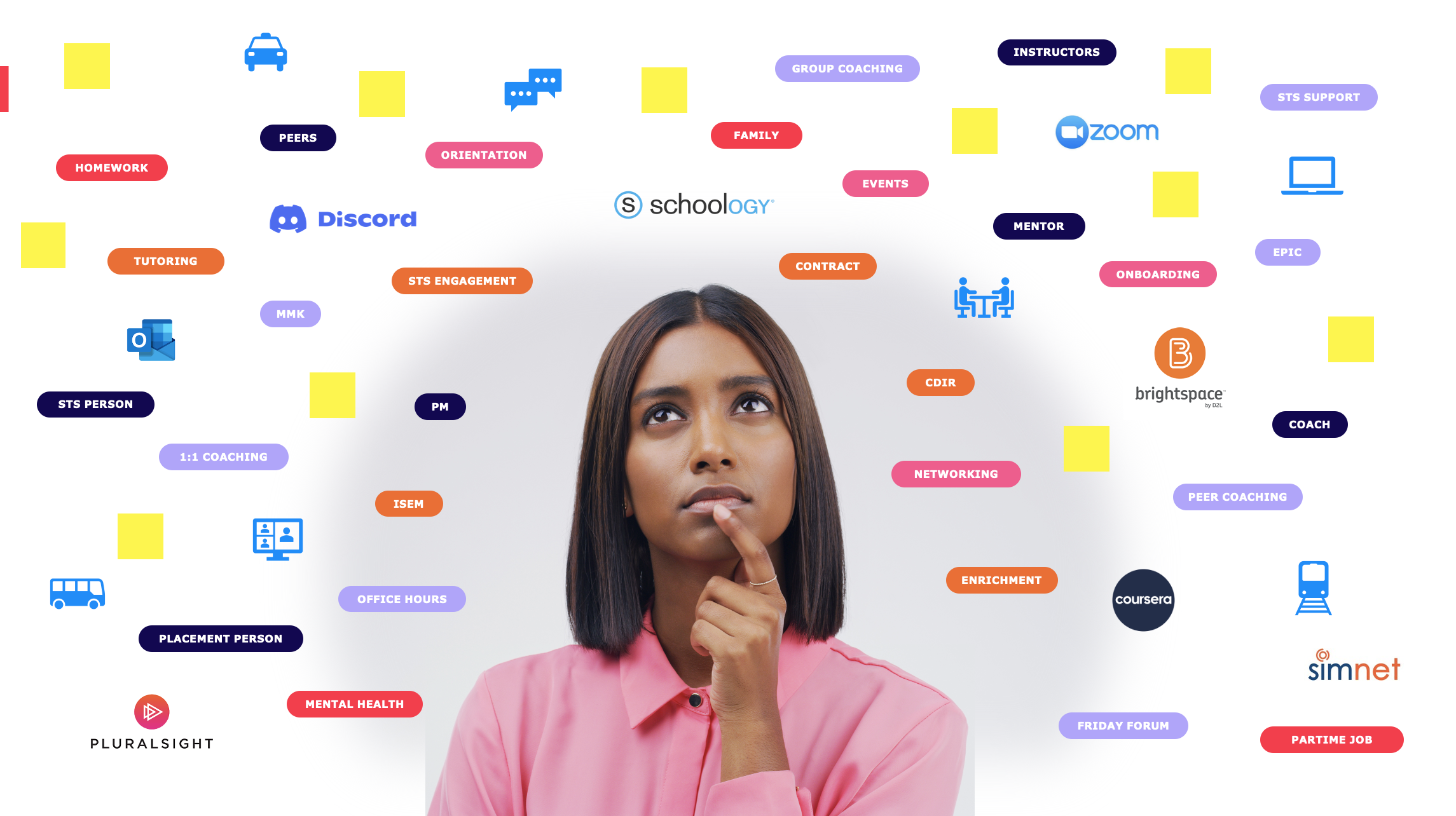
No comprehensive, human-centered map of the student experience existed at Year Up United. Research was episodic and reactive—conducted in response to specific product decisions rather than in service of a sustained understanding of student needs. The organization lacked the user evidence required to prioritize with confidence or make sure that investment in the student-facing experience produced meaningful, measurable impact.
At the same time, the organization was in the middle of a significant structural shift—transitioning from a site-based delivery model to regional structure that spanned multiple markets. That transition created a critical window: a longitudinal, student-centered research effort could generate baseline metrics, inform strategic investments, and ensure that the changes were having the intended effect on business and user outcomes.
THE CORE QUESTION
What does it actually feel and look like to be a Year Up United student, from the moment they first discover the program to the day they graduate?
How do we make that experience measurably better at every stage?
MY ROLE
I led this initiative as the research team manager and project strategist, operating across a cross-functional team that included Experience Design, Enterprise Research, Program, Enrollment Operations, and Transformation & Technology leadership.
My role centered on securing the strategic space for this work to exist, building the team to execute it, and translating findings into decisions that shaped the product roadmap.
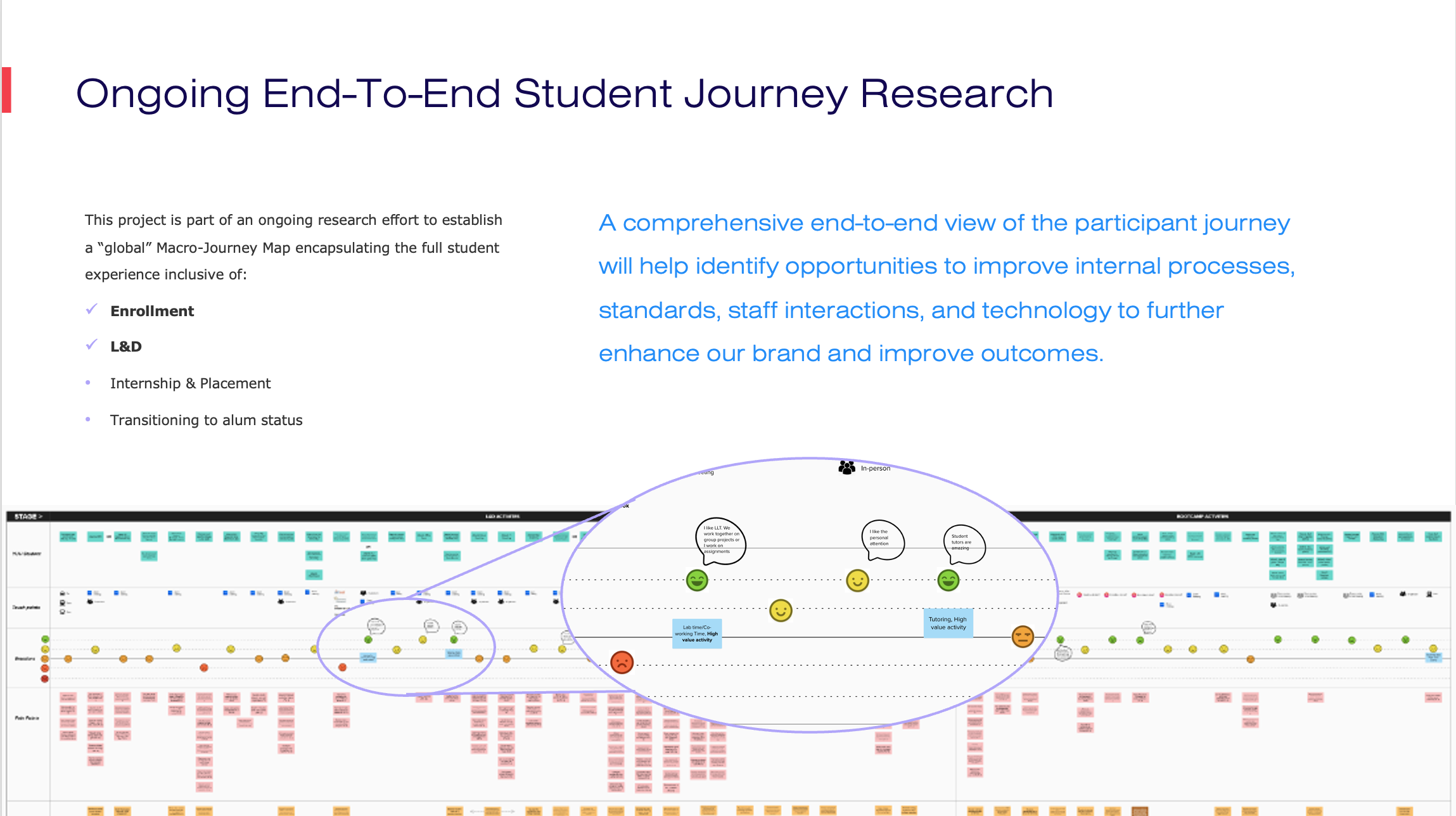
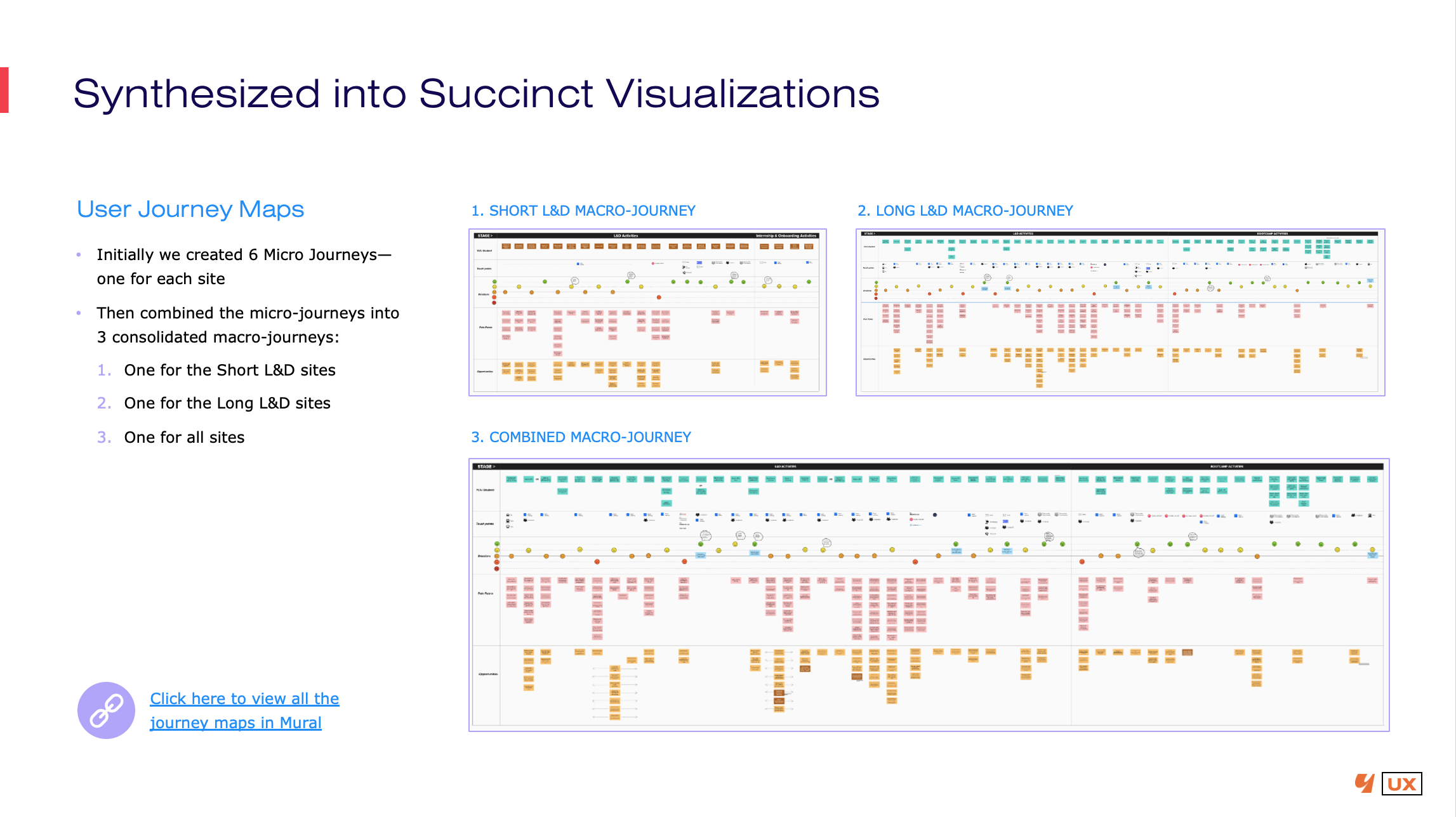
Setting the Strategic Vision Framed the 18-month, four-phase longitudinal study as a foundational investment—the first systematic effort to establish a "global" macro-journey map of the full student experience. Connected the research agenda directly to the organization’s ‘24/’25 Impact Goals.
Securing Organizational Buy-In Made the case to T&T leadership for the resources, access, and runway needed to undertake a multi-stage longitudinal study. Navigated competing priorities and organizational inertia to get the initiative greenlit as a formally recognized sprint.
Building and Leading the Research Team Assembled and directed a team of directors and senior researchers to design, coordinate, and execute two complete study phases. Managed cross-functional coordination with Program to design recruitment criteria, access participants, and ensure research integrity throughout.
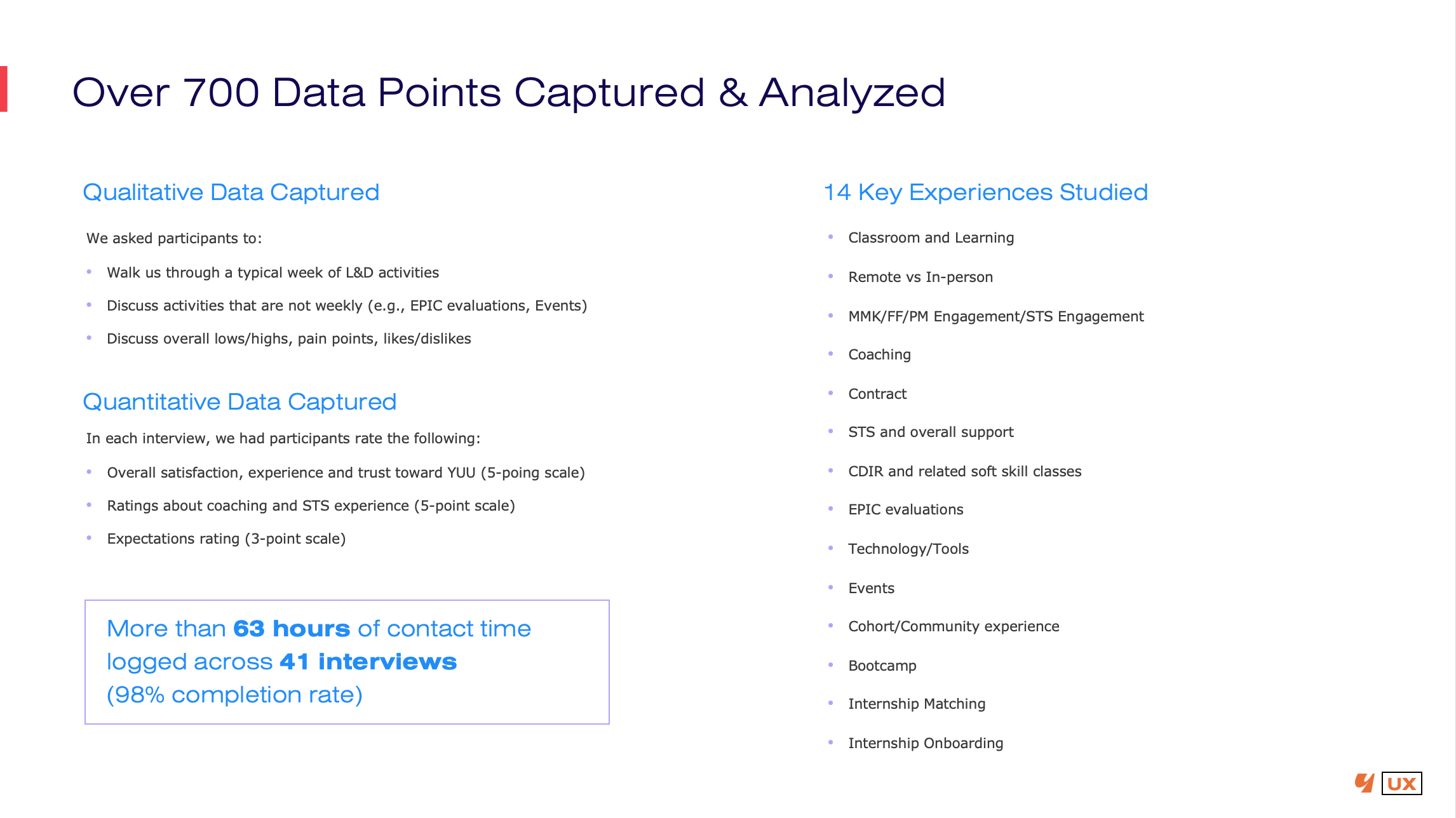
Translating Insights into Product Direction Led synthesis across 1,000+ data points and 100+ hours of contact time, guiding the team from raw findings to an actionable, prioritized recommendation set structured for product and roadmap input.
Influencing the T&T Three-Year Technology Roadmap Brought the consolidated evidence base and recommendation framework to T&T leadership, making the case that two completed phases provided sufficient signal to guide product investment for 24 to 36 months—and successfully placing key initiatives on the organization's technology roadmap.
UX PROCESS
Understand and baseline the current experience
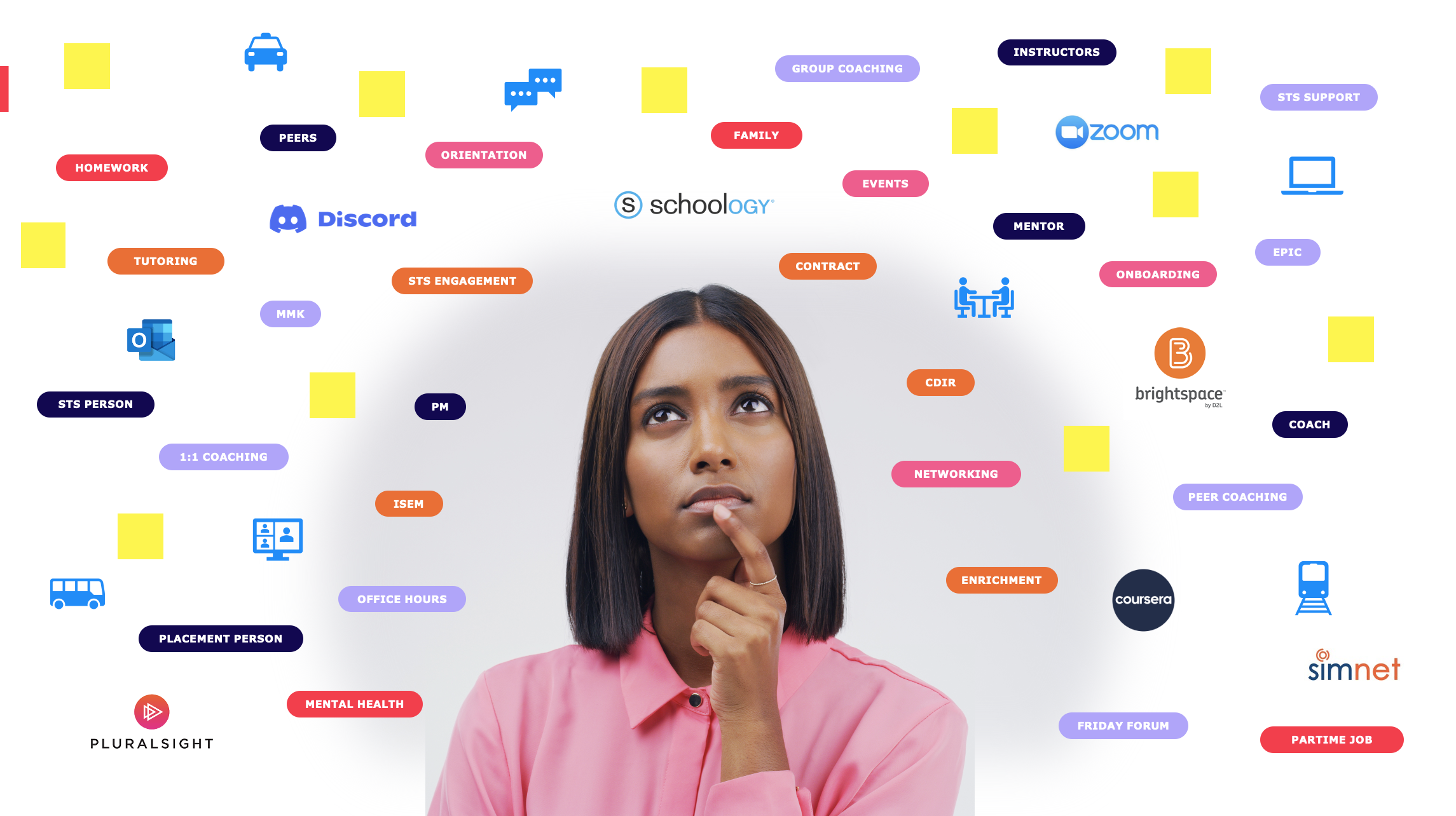
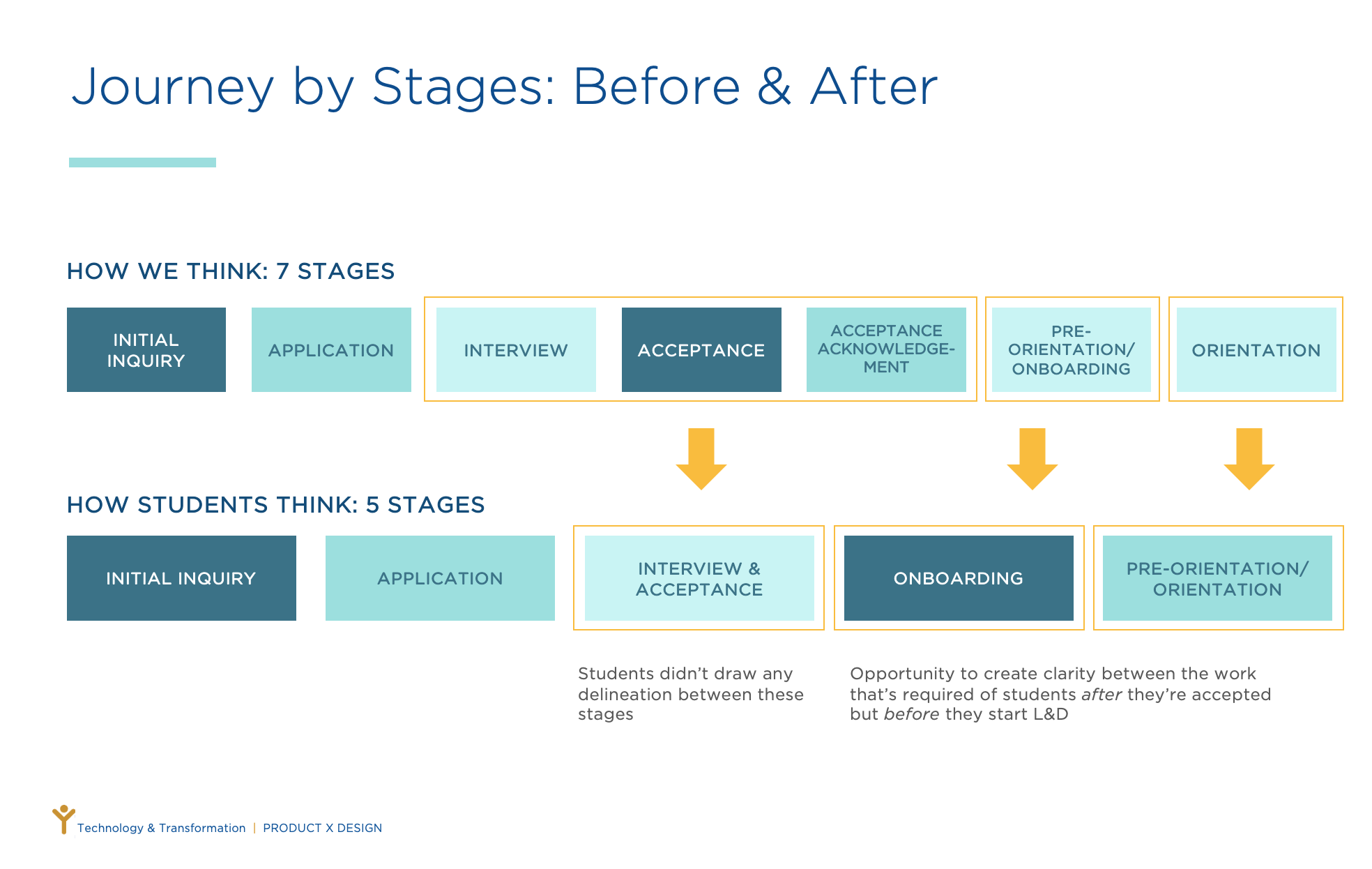
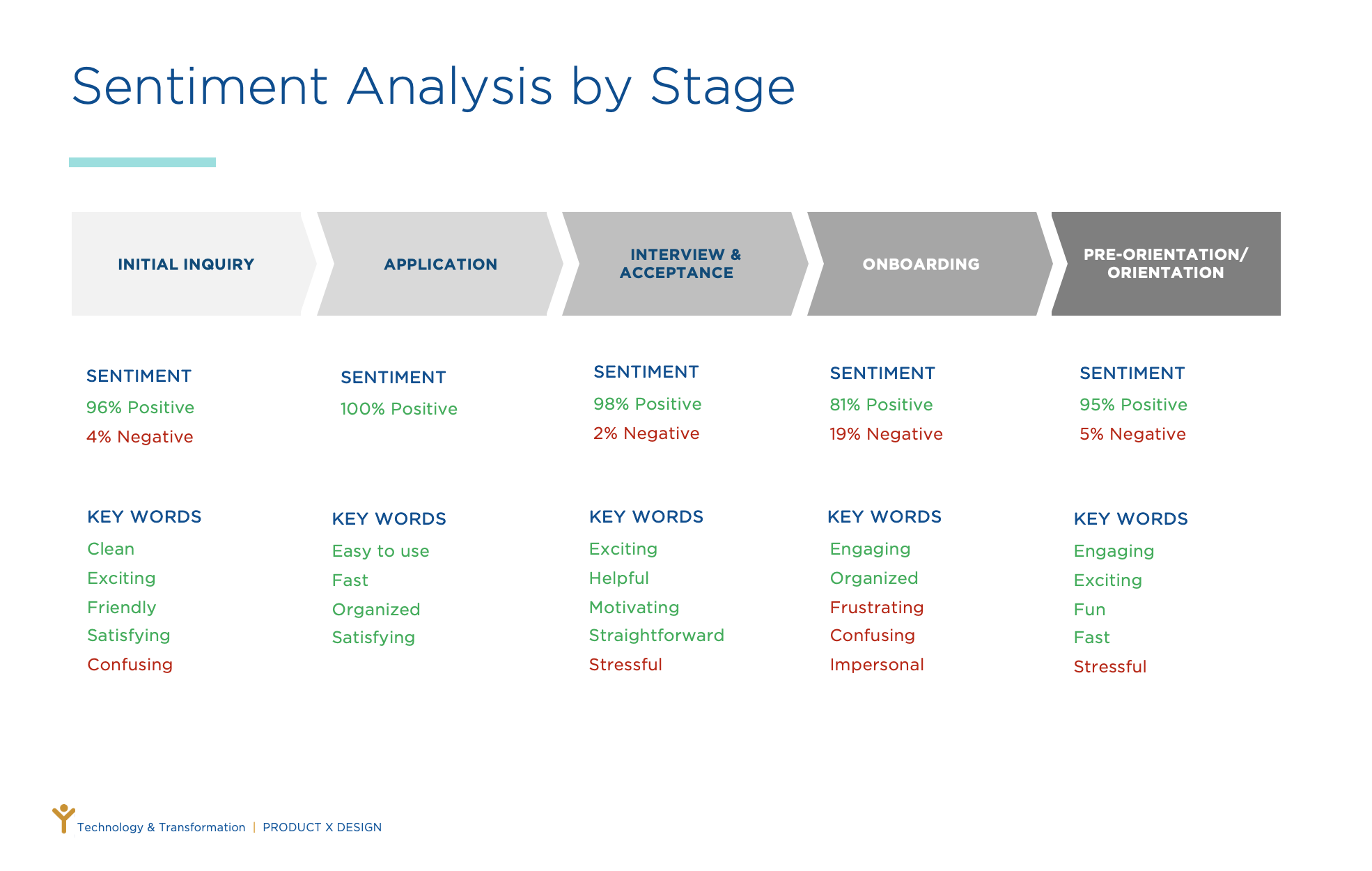
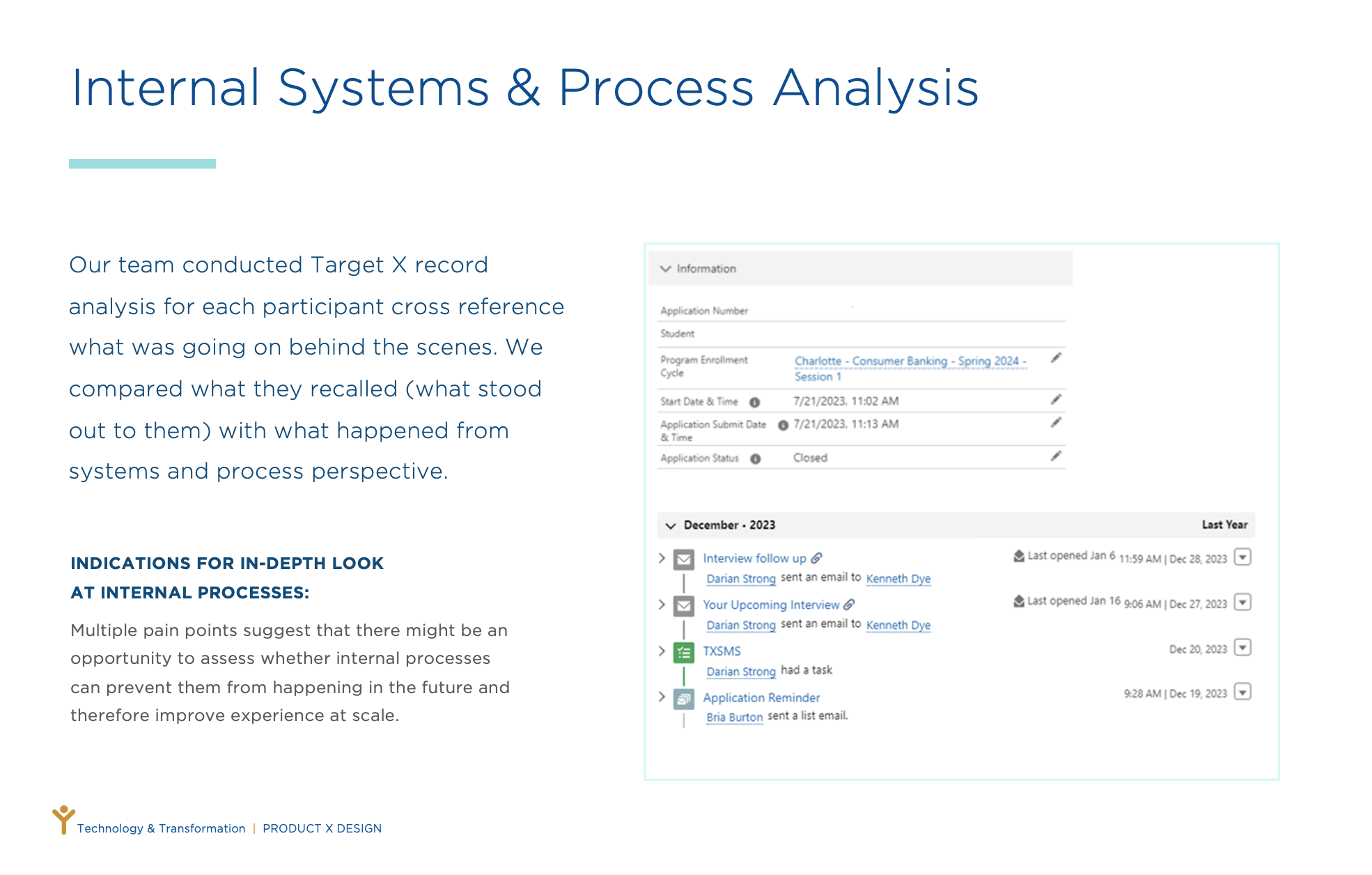
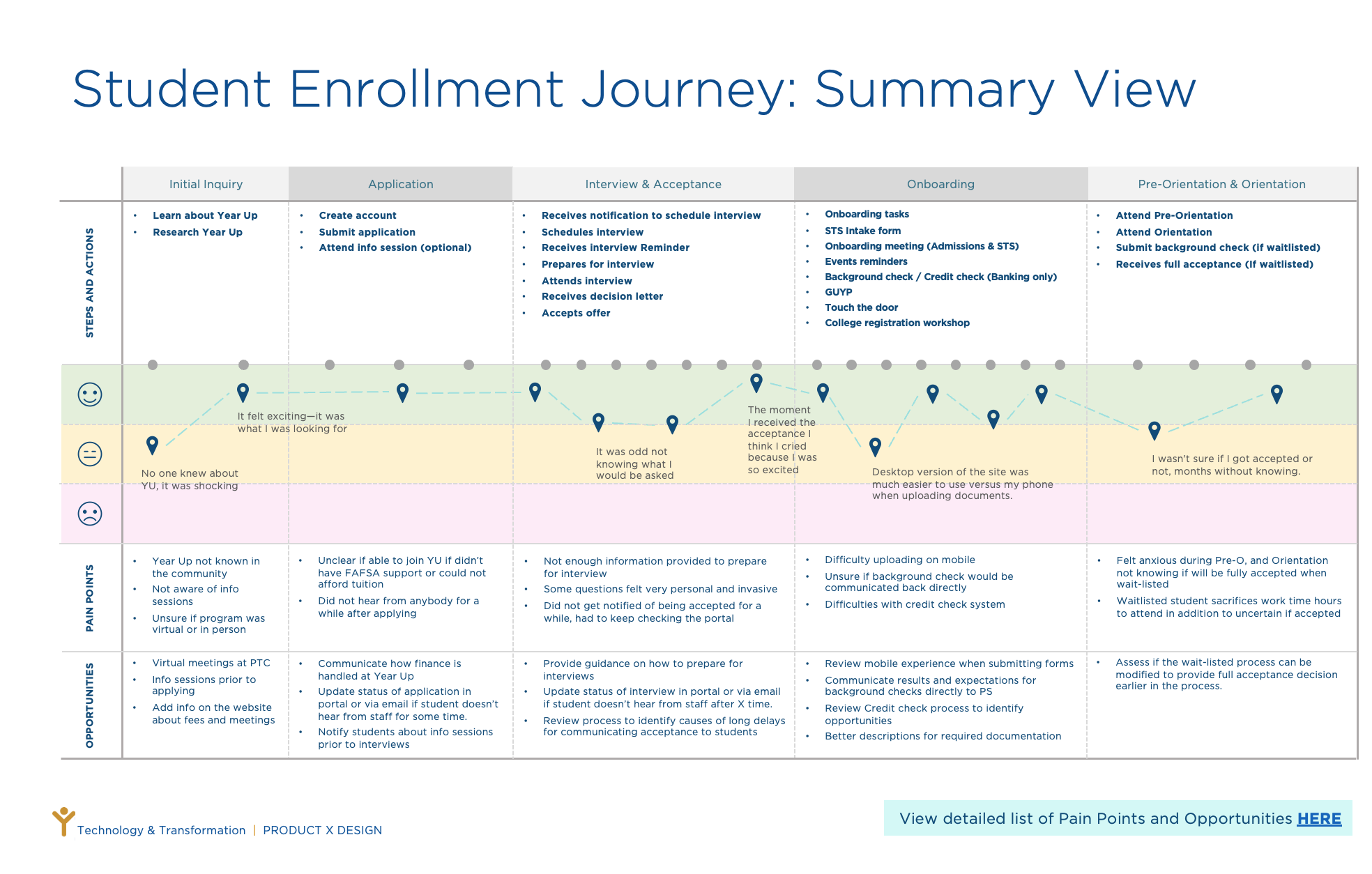
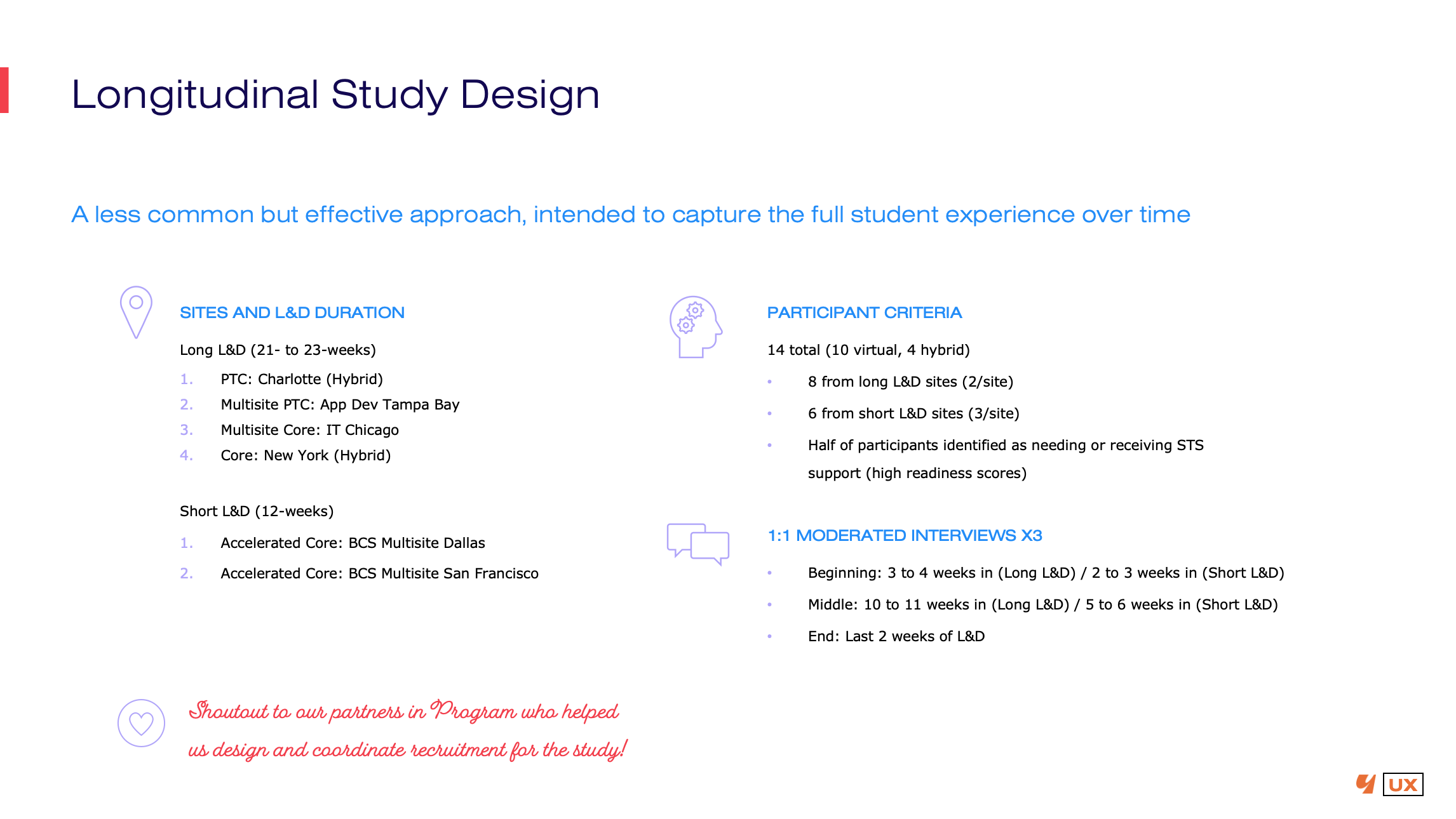
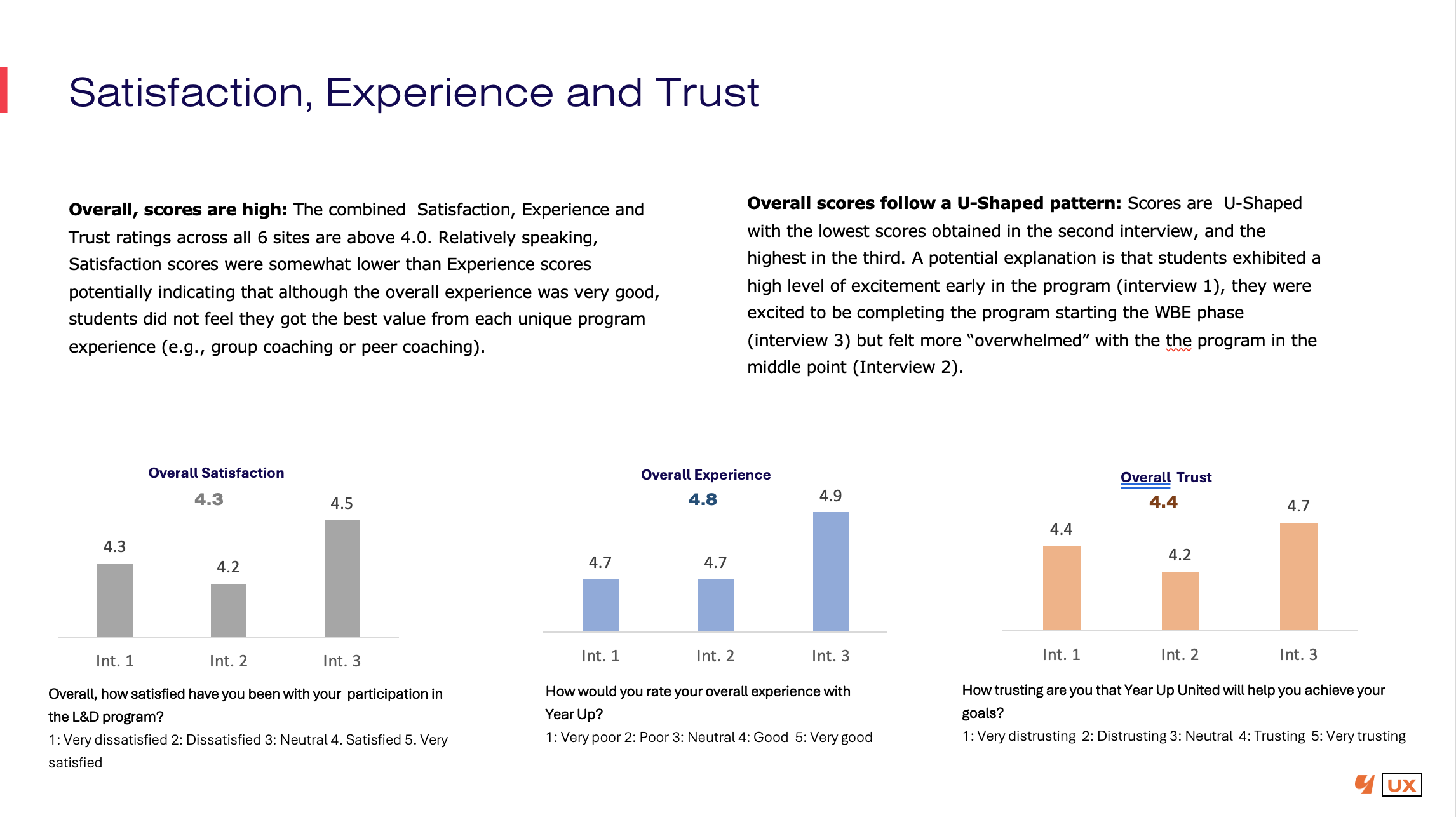
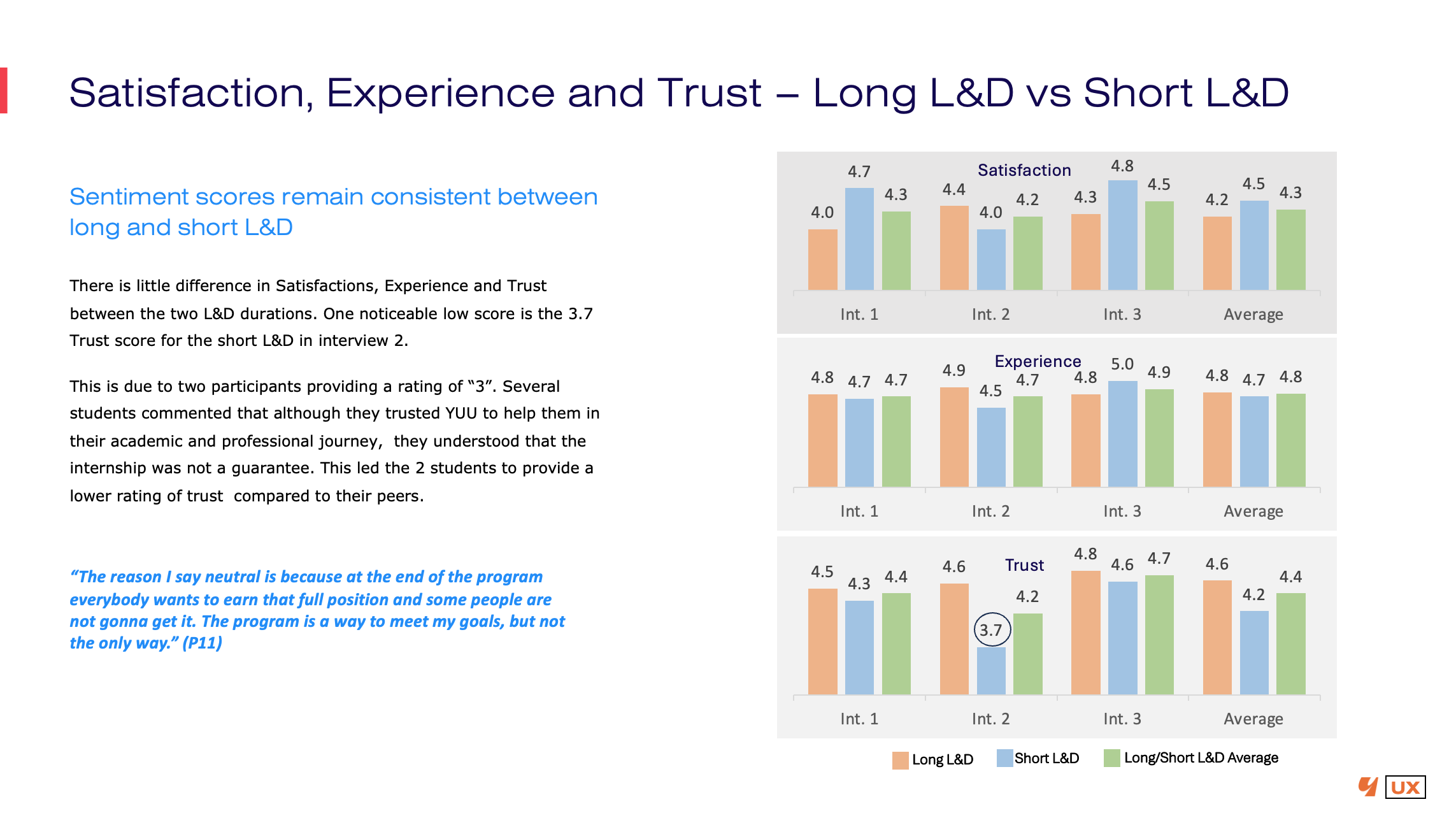
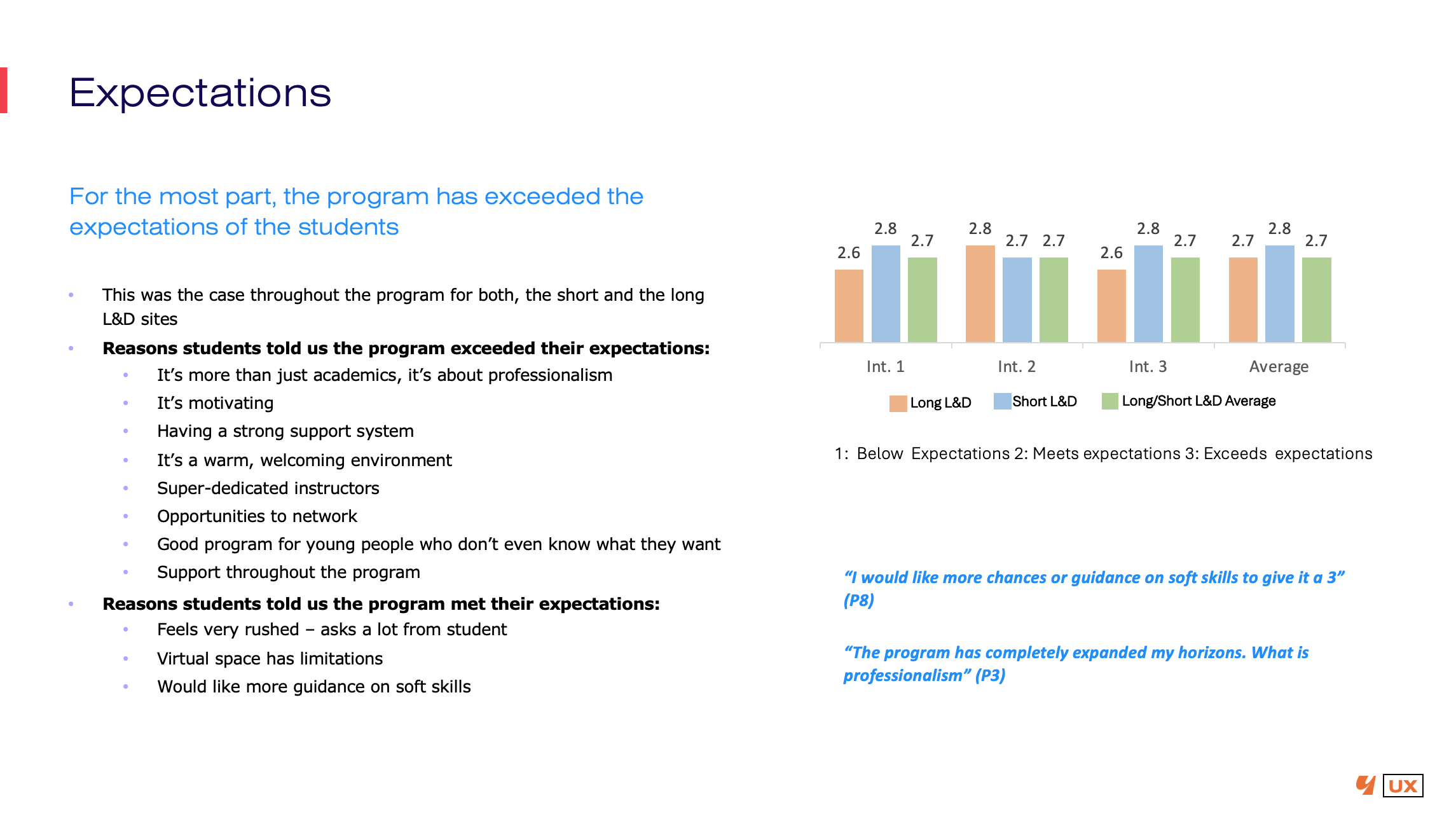
We followed 22 participants from a representative cross-section of Program models (eg, virtual, hybrid, 12-weeks, 21-weeks) through their Enrollment (phase 1) and Learning & Development (phase 2) journeys and documented the highs and lows of their experience, gathering over than 1000 qualitative and quantitative data points between both phases.
Design an insight-driven ideal future state
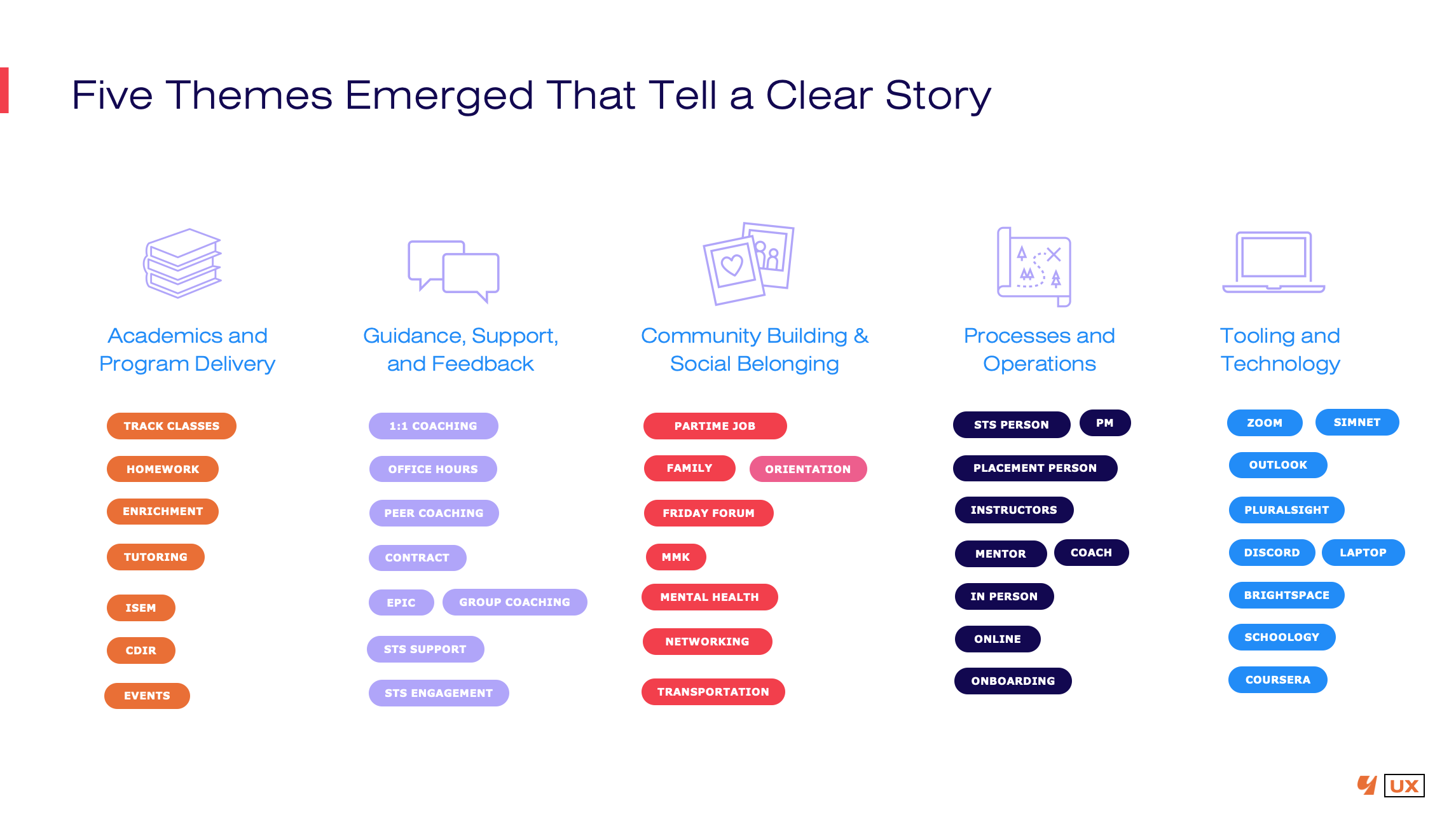
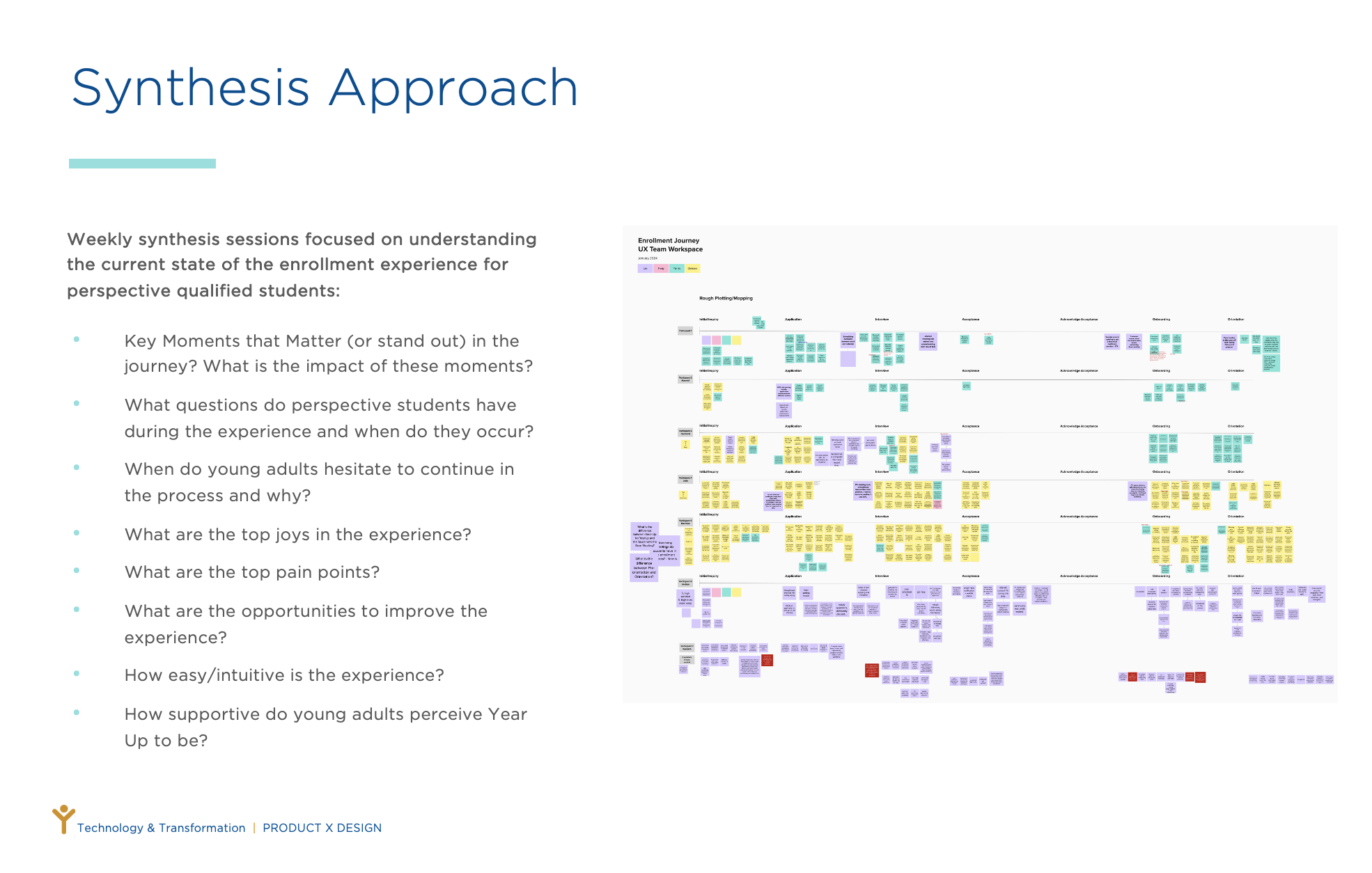
Thorough synthesis of more than 100 hours of participant contact time between both phases, distinct themes emerged that led to a clear set of joys and gaps. We pulled together a set of SMEs and set out to optimize the experience while preserving the positive aspects of the experience and addressing the pain points.
Provide validated, actionable recommendations
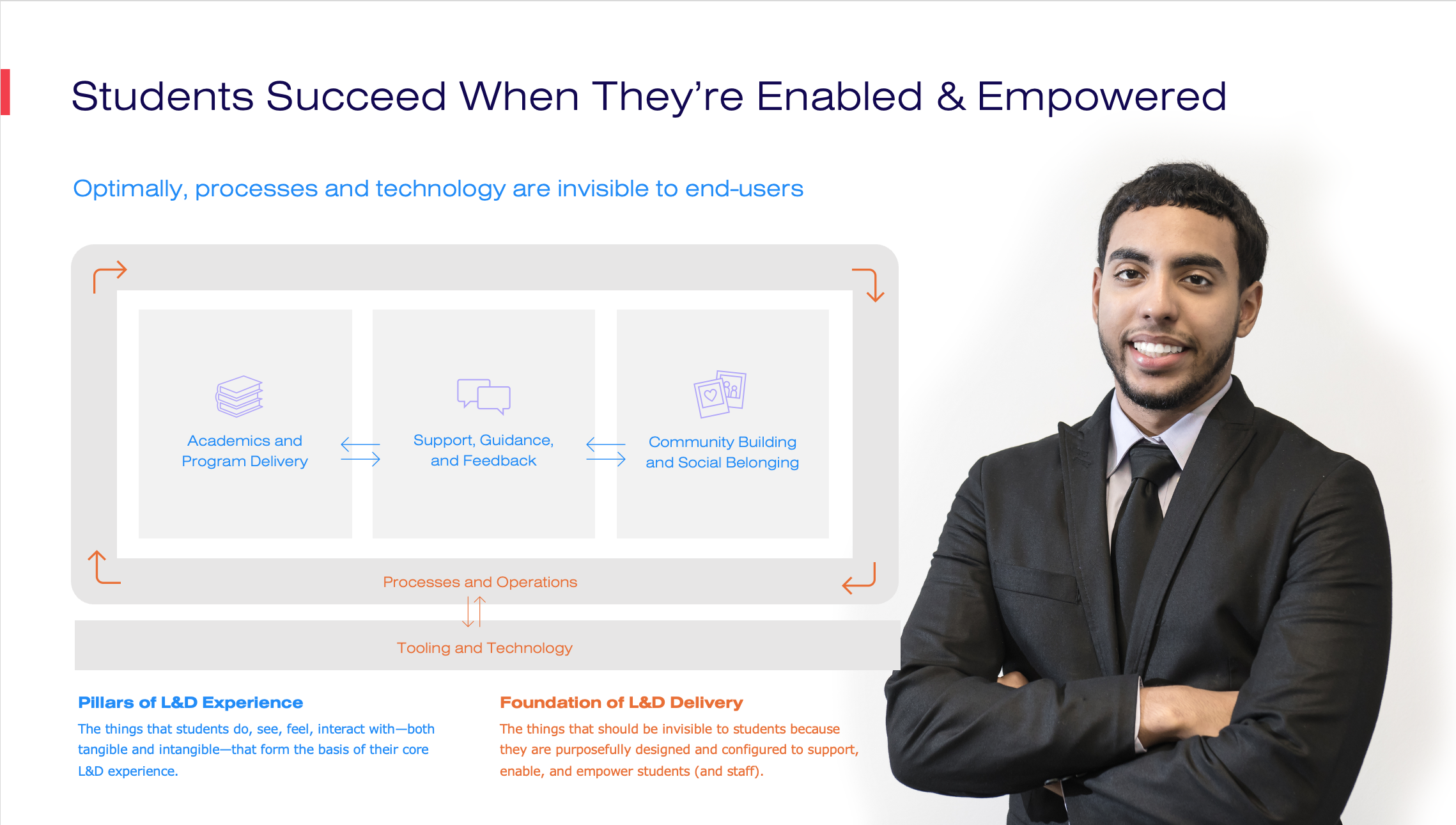
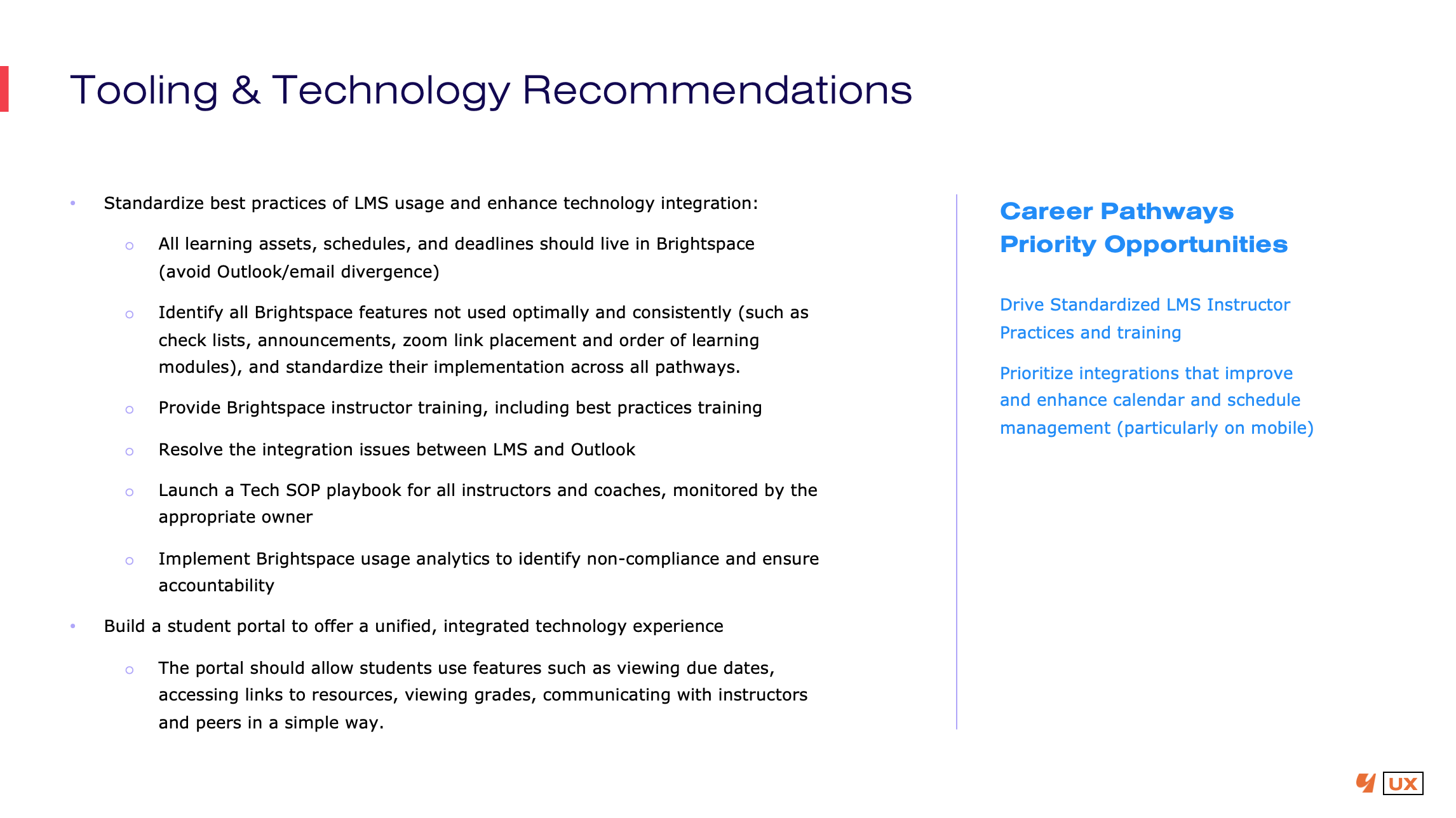
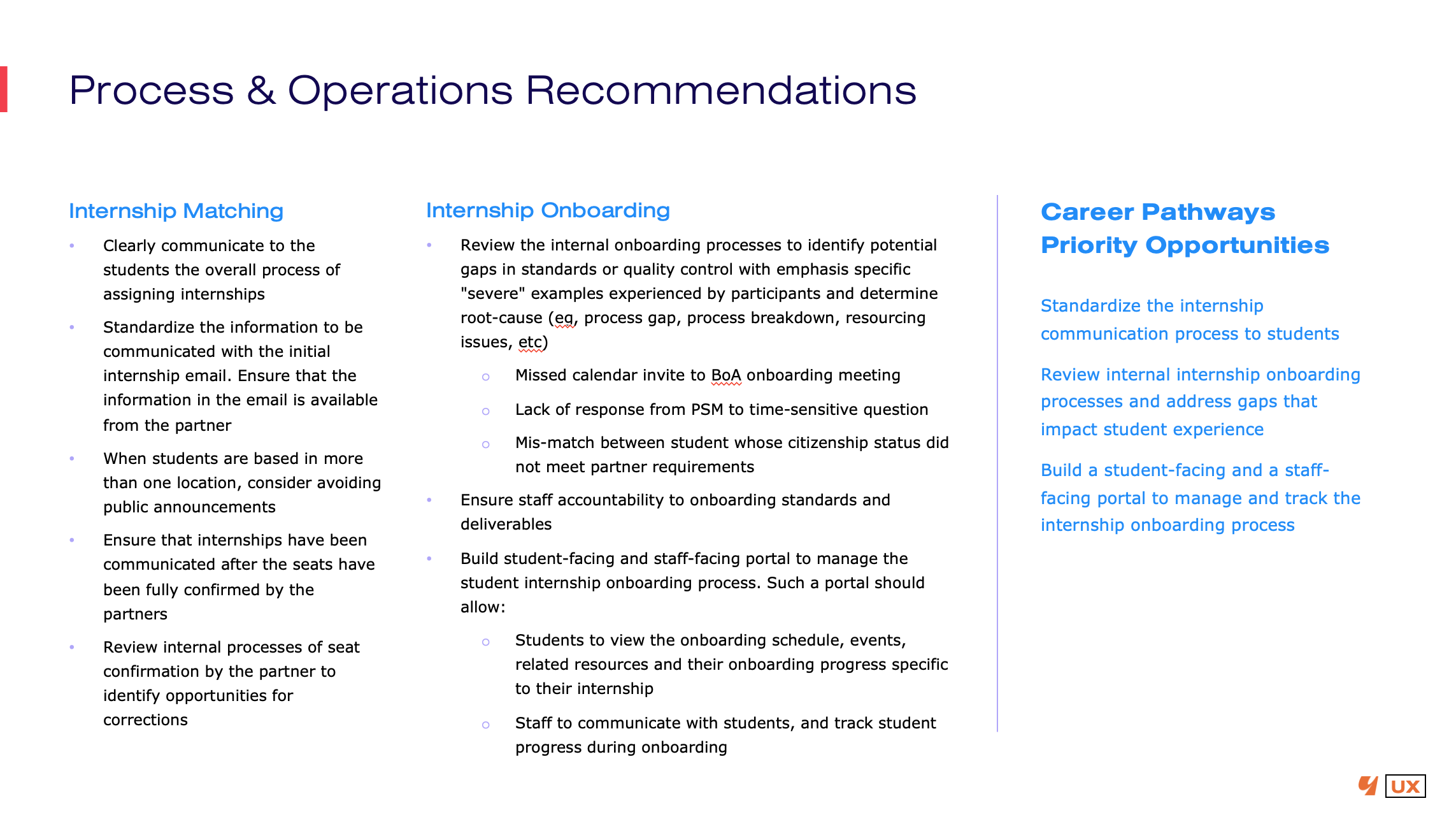
Process, operations, and technology recommendations were clearly sorted and presented to a variety of project stakeholders from business and technology, with a goal of assigning owners and adopting a coordinated strategy that leveraged continuous, iterative improvements.
PROJECT GALLERY
RESEARCH OUTCOMES
PRODUCT LEVEL
Two year data-informed product roadmap
PRODUCT LEVEL
Validated, prioritized product backlog
PRODUCT ROADMAP IMPACTS
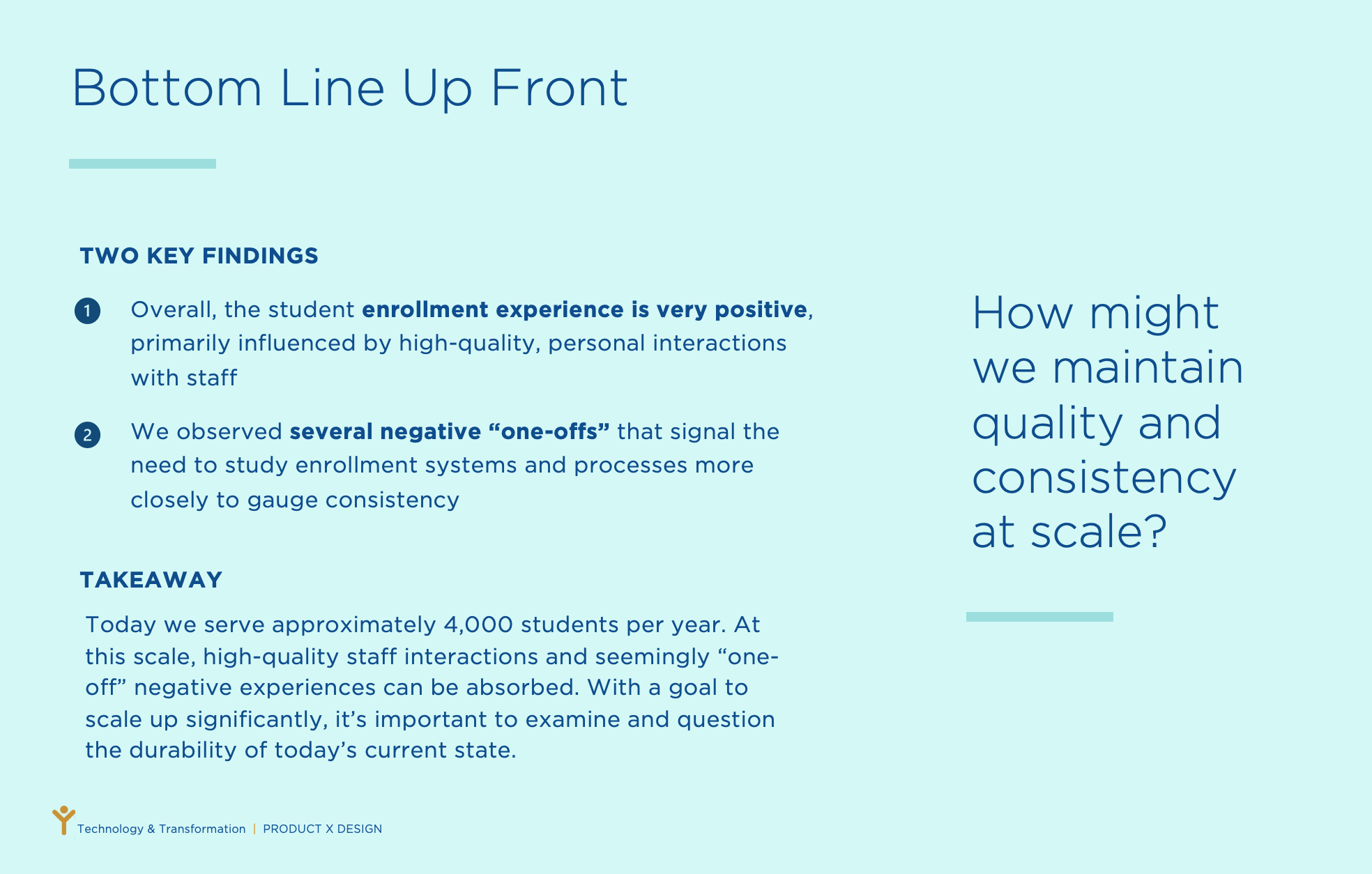
Backlog build-out: Using prevalence scoring, theme clustering, and site-level micro-to-macro journey consolidation, the research yielded a prioritized, actionable recommendation set that easily translated into fully fleshed out user stories.
Framing recommendations as Career Pathways Priority Opportunities—explicitly tying each to the model transition underway to ensure the work remained relevant as the organization evolved.
Making the "enough data" argument: two phases of longitudinal research provided sufficient evidence to drive 18–24 months of product investment without waiting for all four phases to complete.
ENTERPRISE LEVEL
Clearly defined vision to inform tech investment
ORG LEVEL
Ability to measure and interpret impacts of key business decisions
TECHNOLOGY STRATEGY IMPACTS
Translating research into roadmap language—framing student experience gaps as product bets with identifiable business and tech risks if left unaddressed.
Connecting findings to T&T strategic priorities and the organization's Impact Goals to ensure research-backed recommendations competed credibly for tech investment
Establishing PxD as a strategic research function within T&T—shifting the team's positioning from design execution toward evidence-based product influence